
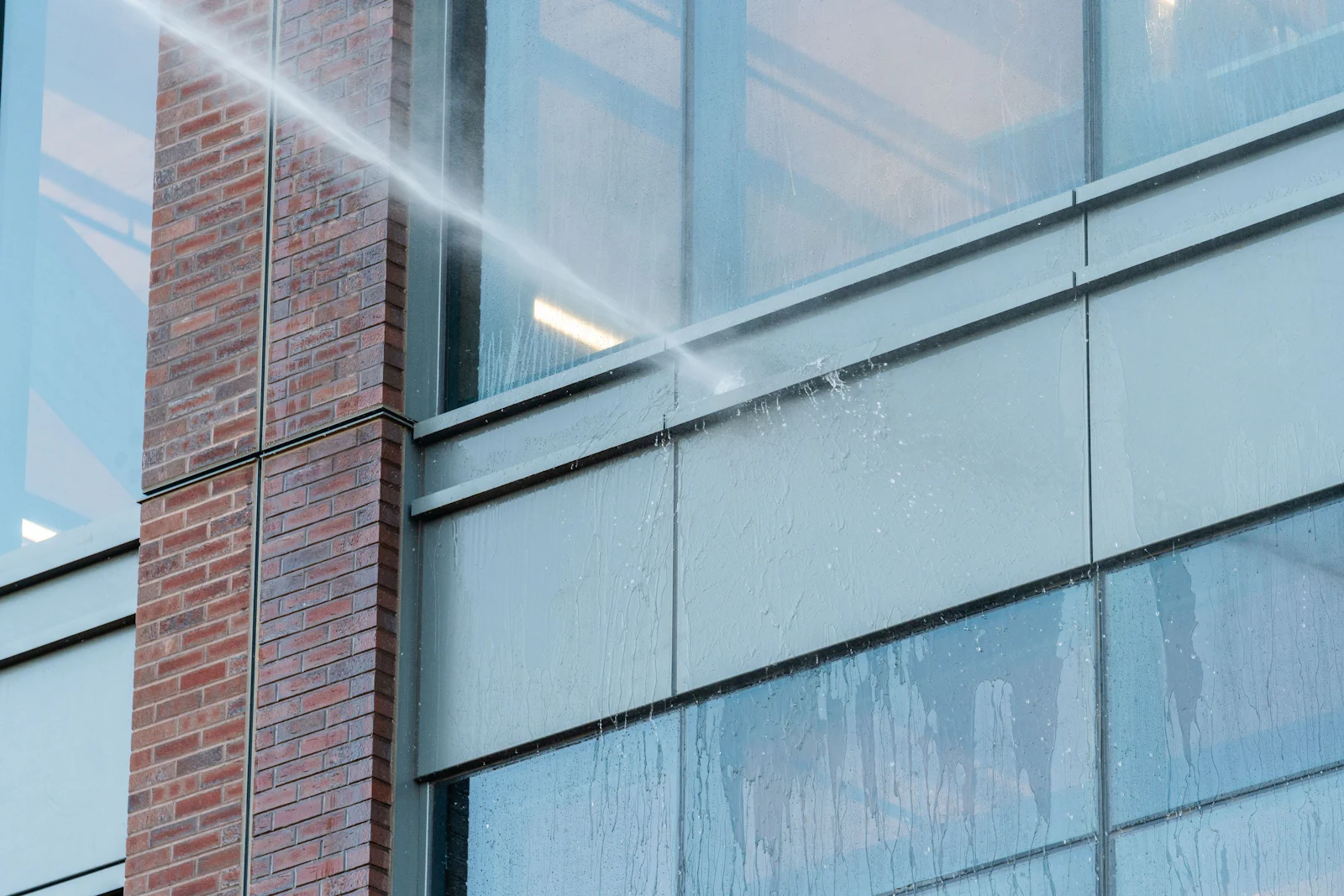
Drone window cleaning uses a remotely piloted drone, fed by a hose from a pump on the ground, to wash upper-story glass and facades from the air. An FAA Part 107 certified pilot flies the drone in vertical passes while visual observers keep the area below clear, so nobody works at height and nothing has to be rented or rigged on the building. It suits multi-story offices, hotels, hospitals, campus buildings and glass facades. Ground-level storefront glass is still faster to clean by hand.
From the ground up, without anyone going up
The rig stays on the ground
The pump, water supply and cleaning solution stay on a truck or trailer at ground level. A hose runs from the rig to the drone, so the drone carries only the spray, not the tank.
A certified pilot flies the pattern
An FAA Part 107 certified pilot holds the drone a controlled distance from the glass and works the facade in vertical passes, one section at a time.
Observers keep the ground clear
Visual observers watch the drone, the hose and the area below, and pause the work whenever people or vehicles need to pass.
Ground crews handle the street level
Storefronts, entry doors and low windows are cleaned by hand in the same visit, so the whole facade is done on one schedule.
Buildings where height is the hard part
Drone window cleaning earns its keep wherever reaching the glass costs more than cleaning it. That usually means:
- Multi-story office buildings and glass curtain walls
- Hotels, resorts and casinos that can't close entrances
- Hospitals and medical campuses that run around the clock
- University and government buildings
- Curved, angled or oddly shaped facades lifts can't get close to
- Buildings where landscaping or traffic blocks lift access
What changes when you stop climbing
Traditional high-rise window cleaning means technicians on swing stages, on ropes or in a lift basket, plus the setup and takedown for every drop. Entrances and sidewalks below often have to close while it happens.
A drone removes the work at height entirely. There's no stage to rig, no lift to rent and no technician hanging off the building. The drone repositions between sections in minutes, and the building can usually stay open. It's the same approach that let us clean the full facade of a 16-story casino hotel tower where a circular base kept every lift and scaffold away. We flew it from the roof down in six working days.
For the full side-by-side, see our commercial window cleaning page and our breakdown of drone cleaning vs. lifts and scaffolding.
When a drone isn't the right call
Better by hand
- Ground-floor storefront glass
- Interior windows
- Small, single-story buildings
Needs planning first
- Enclosed courtyards with no flight clearance
- Buildings near airports, which can need FAA airspace authorization
- Windy stretches of the season, when flights may pause
A good contractor will tell you where the drone fits on your building and where it doesn't, and quote each part with the right method.
What to expect
A quote built around your building
We look at the glass, the height, the access and your operating hours, and quote each section with the method that fits it.
A schedule that works for you
Work is planned around tenants, guests and opening hours. On one resort project, every flight stayed inside a weekday window so weekend guests were never affected.
A small crew, a small footprint
The crew sets up the rig, marks off the work area, and moves section by section. No lifts crossing the lawn, no scaffolding on the sidewalk.
Glass, frames and sills
We clean the frames and sills along with the glass, so the facade reads clean as a whole, not just the panes.
Drone window cleaning questions
Does wind affect drone window cleaning?
Yes. A cleaning drone has to hold a steady position close to the glass, so strong or gusty wind can pause flights. A good crew watches conditions through the day and builds some weather flexibility into the schedule.
Do you need FAA permission to clean windows with a drone?
The pilot must hold an FAA Remote Pilot Certificate under Part 107 for any commercial drone work. Buildings in controlled airspace, such as those near airports, can also need an airspace authorization before the job, which the drone company should arrange.
Can a drone clean windows on any building?
Most multi-story commercial buildings, yes, including curved and oddly shaped facades. Fully enclosed courtyards with no flight clearance and interior glass are the main exceptions, and ground-level storefront glass is usually faster to clean by hand.