
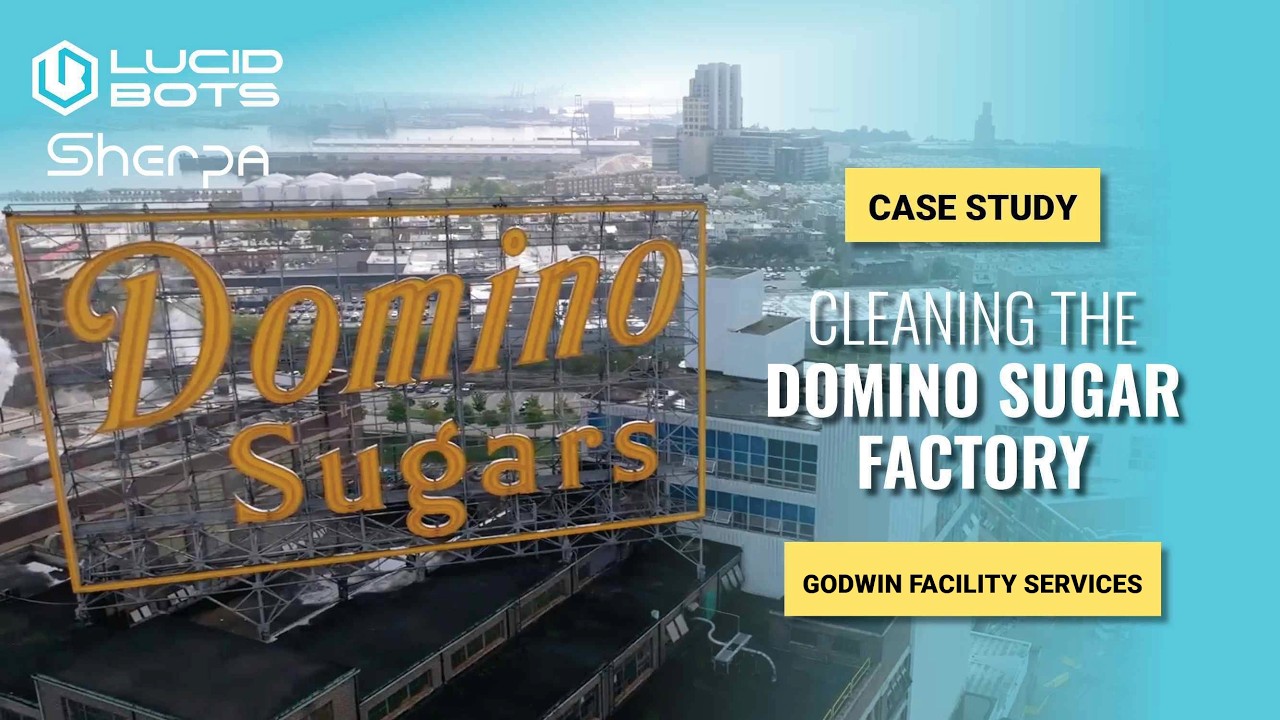
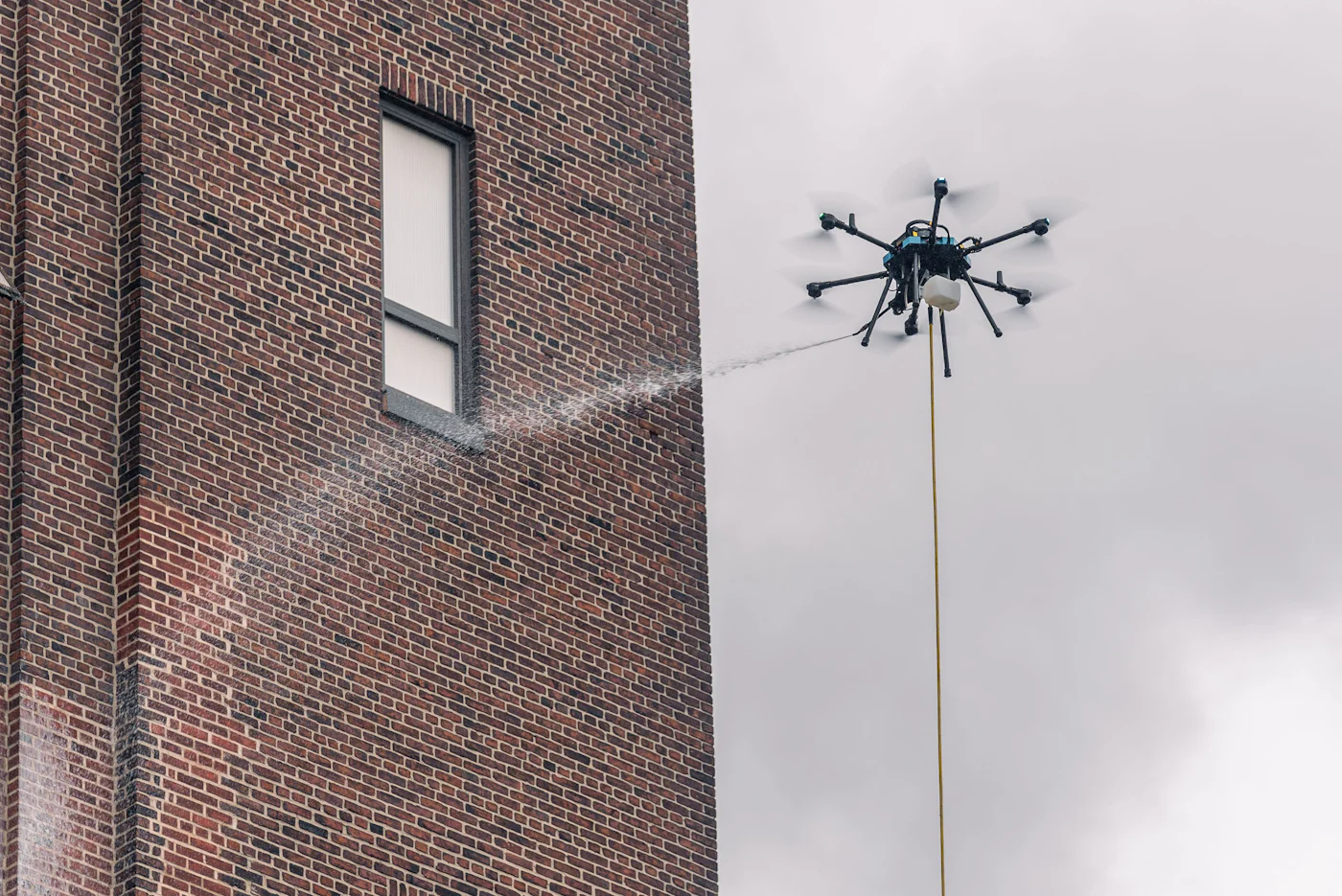
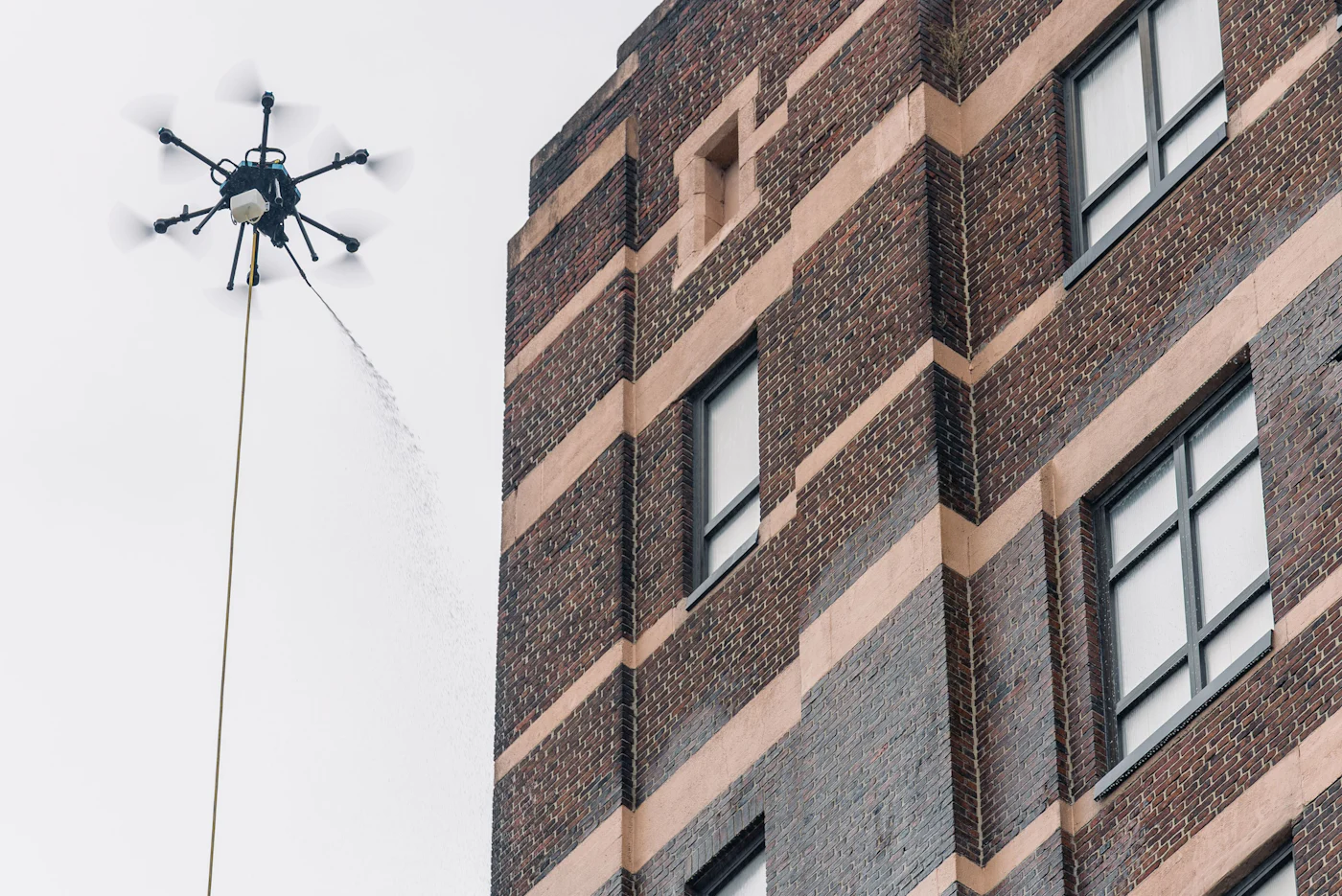
Godwin Facility Services softwashed the historic Domino Sugar factory in Baltimore using cleaning drones instead of booms, scaffolding, or rope access. Because the facility is a live, operating factory, traditional lift equipment would have taken roughly six weeks with a 12-13 person crew and around $50,000 in lift rentals alone — and would have disrupted production. The drone crew completed the job in about two weeks with six people on site, without shutting the factory down.
Key facts
| Client | Domino Sugar, Baltimore refinery |
|---|---|
| Location | Baltimore, Maryland |
| Building | 162 feet tall, 103 years old, original brick, mortar and window sills |
| Constraint | A live factory that could not shut down |
| Method | Drone softwash with a bleach-based solution, no high pressure |
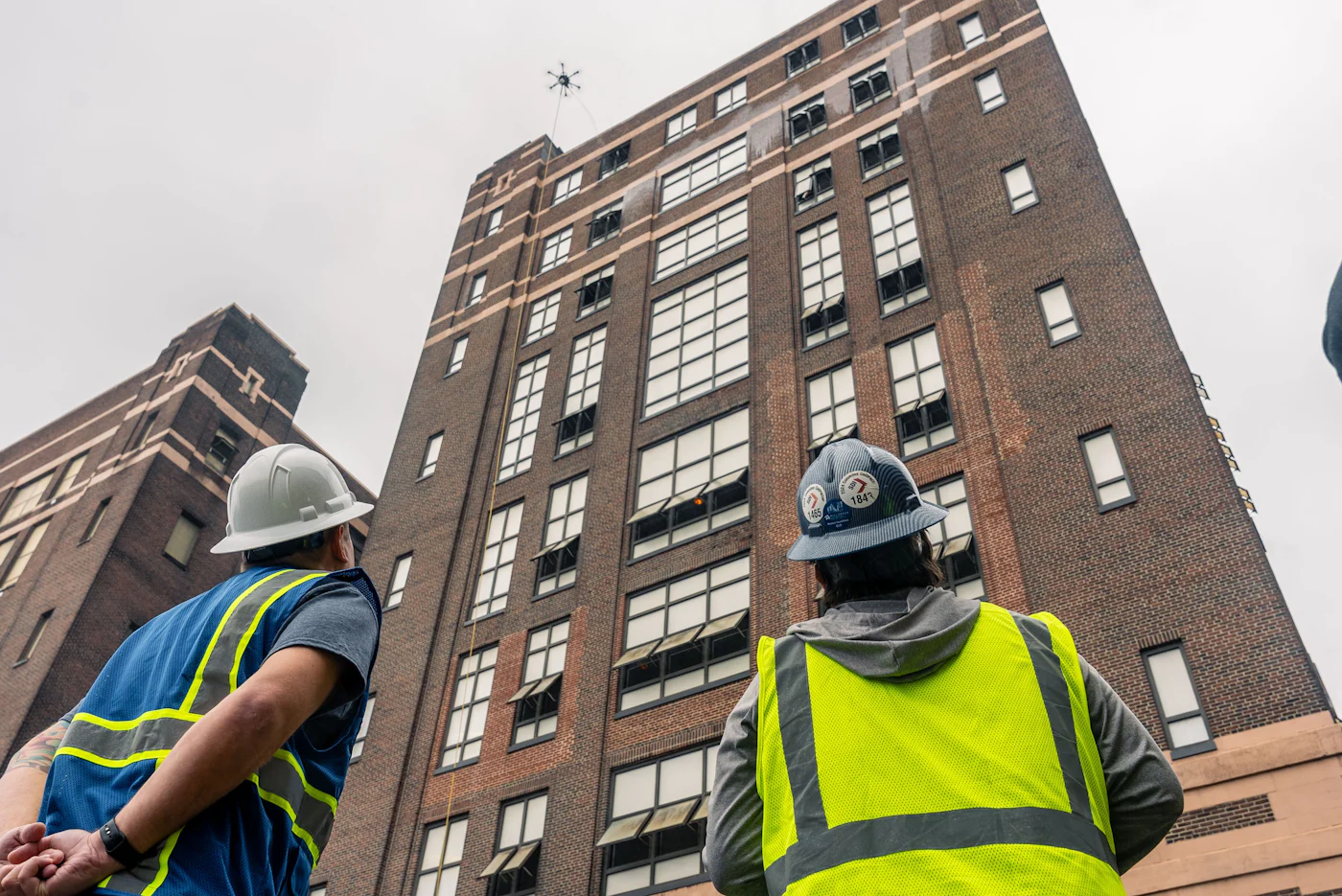
| Drone crew | About 6: pilot, two visual observers, pump operator and ground support |
| Lift-based crew | 12 to 13 people |
| Timeline | About 2 weeks, against roughly 6 weeks with lifts |
| Lift rental avoided | Roughly $5,000 to $6,000 a week per boom lift, with two likely needed |
| Estimated savings | Roughly $50,000 |
A live factory that couldn't afford to stop
Production never stops
Domino Sugar's Baltimore facility runs as a working factory around the clock. Traditional lift equipment would have forced a shutdown to clear space and protect workers, cutting directly into production.
A massive, historic structure
At 162 feet tall and 103 years old, the building would have required large boom lifts — roughly $5,000-$6,000 a week each, with likely two needed — plus a 12-13 person crew working for weeks.
A century-old facade
Original brick, mortar, and window sills from a building built in the early 1900s meant high pressure was off the table — anything too aggressive risked real damage.
A smaller footprint, a faster timeline
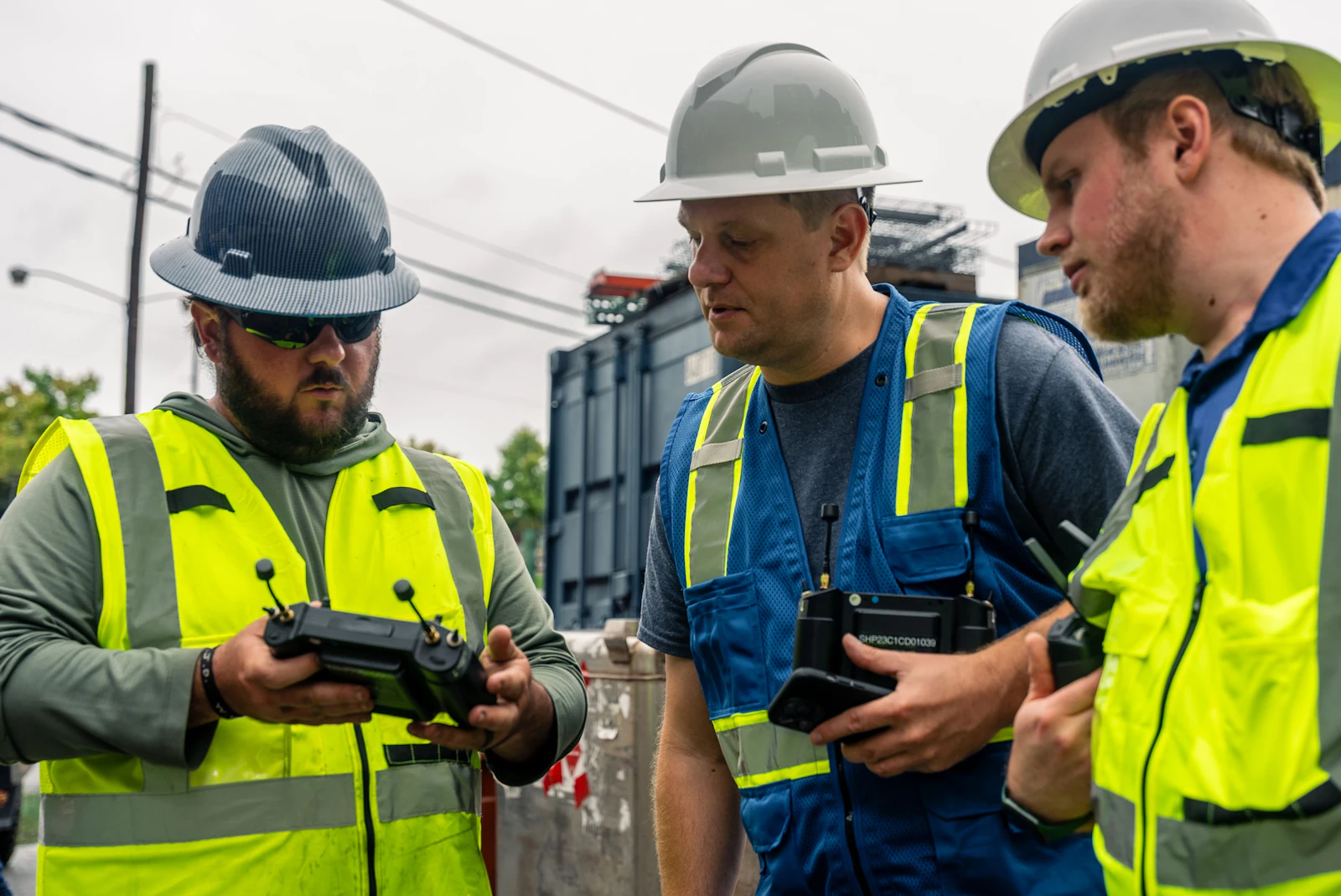
Godwin Facility Services brought a drone crew instead of a fleet of boom lifts — a pilot, two visual observers, a pump operator, and ground support, about six people total. The team softwashed the entire facility using a bleach-based softwash solution formulated to lift buildup without touching the original brick, mortar, or window sills.
- Softwash instead of high pressure to protect a 103-year-old facade
- A six-person team versus the 12-13 a lift-based crew would need
- Drones repositioned in minutes around active loading docks and foot traffic — no shutdown required
- Project timeline cut from a planned two to two-and-a-half weeks down to about two, weather permitting
Photos from the refinery
Faster, cheaper, and the factory never closed
~$50K Saved
Between avoided lift rentals and the smaller crew, the drone approach saved roughly $50,000 versus traditional access methods.
No Shutdown
The factory kept running the entire time — drones moved out of the way quickly whenever staff or equipment needed the space.
Facade Protected
Softwashing lifted a century of buildup without stripping paint, damaging mortar, or harming original window sills.
Timeline Cut in Half
What traditional access methods would have stretched to six weeks was completed in roughly two.
Questions this project answers
Can a factory be cleaned without shutting down production?
Yes. The Domino Sugar refinery in Baltimore kept running the whole time. The drone crew repositioned in minutes around active loading docks and foot traffic, where boom lifts would have forced areas to close.
How much does drone cleaning save compared with boom lifts?
On this project, roughly $50,000. Boom lifts large enough for a 162-foot building run about $5,000 to $6,000 a week each, two were likely needed, and the lift-based job was estimated at six weeks with a 12 to 13 person crew. The drone crew finished in about two weeks with six people.
Is drone cleaning safe for historic brick?
Yes, when it is softwashed. On this 103-year-old building we used a bleach-based softwash solution instead of high pressure, which lifted the buildup without damaging the original brick, mortar or window sills.
How many people does a drone cleaning crew need?
About six on this job: a pilot, two visual observers, a pump operator and ground support. A lift-based crew for the same building would have needed 12 to 13.